
Destinations & itineraries · 03 Jun 2026 · 10 min read
Caprera Island: hiking trails, beaches and coves at the heart of the La Maddalena archipelago
Caprera Island is the second largest island in the La Maddalena archipelago, in the north-east of Sardinia. A nature reserve since 1980, its 15.7 km² of Mediterranean maquis and rugged granite coastline conceal exceptional coves - including Cala Coticcio, nicknamed the “Sardinian Tahiti” - reachable on foot via marked trails or at anchor by catamaran. […]
Caprera Island is the second largest island in the La Maddalena archipelago, in the north-east of Sardinia. A nature reserve since 1980, its 15.7 km² of Mediterranean maquis and rugged granite coastline conceal exceptional coves - including Cala Coticcio, nicknamed the “Sardinian Tahiti” - reachable on foot via marked trails or at anchor by catamaran. For those who sail, Caprera offers a dimension that land visitors never glimpse: hidden inlets whose approach from the sea remains the quietest and the most striking.
What is Caprera Island and where is it located in the archipelago?
Caprera is a 15.7 km² island connected to La Maddalena by the 600-metre Passo della Moneta bridge, built in 1958. Its highest point is Monte Teialone, at 212 metres above sea level. The island is part of the La Maddalena archipelago national park, created in 1994 and the first marine-geological national park in Sardinia. It has been classified as a nature reserve since 1980. With more than 34 km of granite coastline, it holds some of the most pristine coves in the Mediterranean. Access to the island itself is free, with no entry fee.
How do you reach Caprera from La Maddalena or from the sea?
Caprera is reached by land by crossing the Passo della Moneta bridge from La Maddalena - by car, bicycle, scooter or bus. To reach La Maddalena from the mainland, the ferry departing from the port of Palau makes the crossing in around 15 minutes. For sailors, access is directly by sea, with several anchorage points in the authorised zones of the park.
Access by catamaran - regulations to know: from 15 May to 31 October, a park entry ticket is mandatory for any vessel anchoring in the archipelago. Mooring buoys are available at Porto Palma and Cala Portese for boats under 15 metres. Speed is limited to 7 knots within 300 metres of the shore, and dropping anchor on posidonia seagrass is prohibited. There is no accommodation on the island (a strict nature reserve): overnight anchorages take place in the park’s designated zones, with a valid ticket.
For those who wish to explore Corsica and then reach the La Maddalena archipelago, the two destinations are close: Bonifacio and Caprera are separated by only a few nautical miles, which makes them a natural combination for a cruise between Corsica and Sardinia.
What are the best hikes to do on Caprera Island?
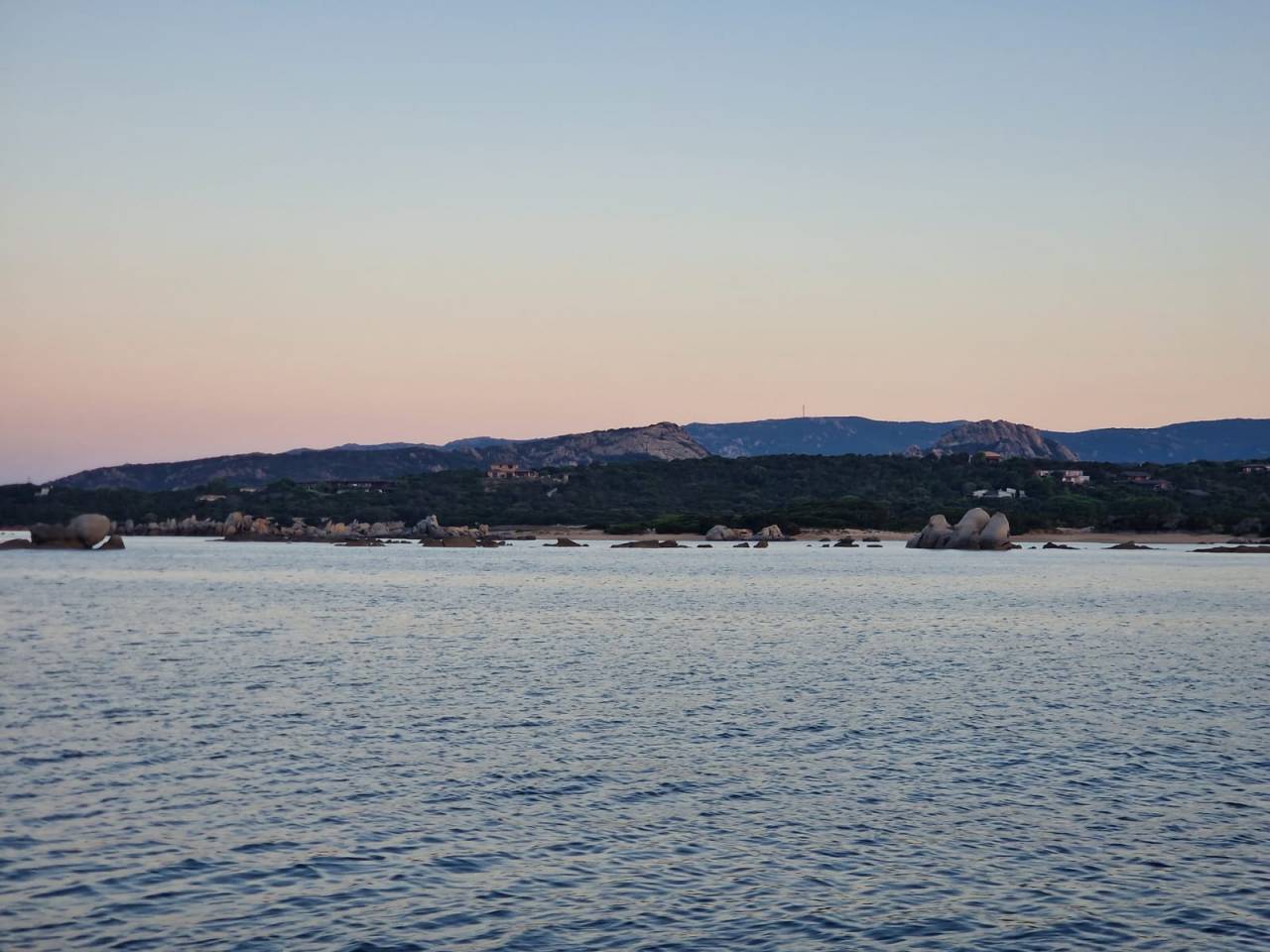
Caprera’s network of 16 marked trails, restored in 2011 on the basis of a 19th-century network, lets you explore the interior of the island for every level. From the deck of a catamaran anchored at Porto Palma, the ridge of Teialone stands out behind the pink granite rocks - a natural landmark for the approach. Three trails stand out for their interest and variety.
Monte Teialone - the panoramic summit of Caprera
The Monte Teialone loop is an 8.5 km route with 230 metres of elevation gain, doable in around 2h30, moderate level. The start is from the Casa Garibaldi car park. At the summit (212 m), the panorama takes in the entire La Maddalena archipelago, the islands of Santo Stefano and Spargi, and on a clear day as far as the Corsican coast. From the sea, this summit is visible from the anchorages on the west coast - it serves as a natural landmark when approaching the archipelago under sail.
The Cala Napoletana trail - the cove on the north of the island
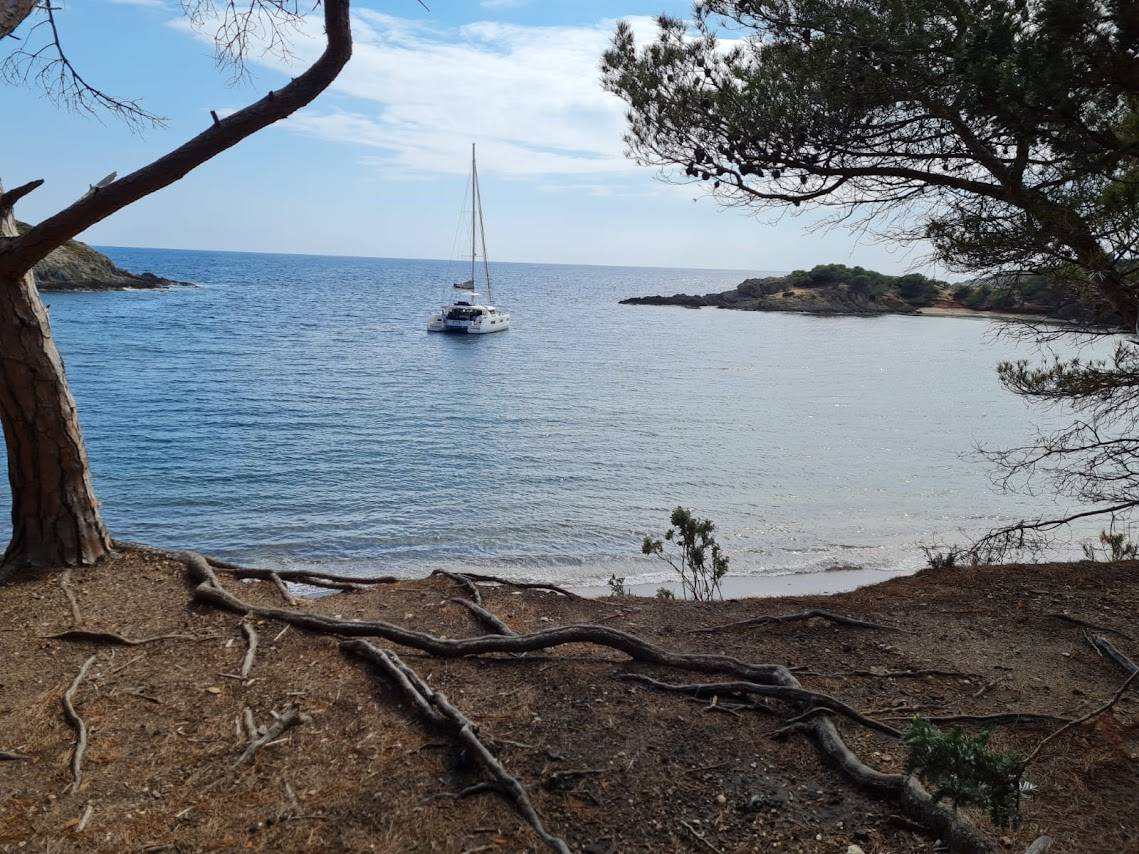
The trail to Cala Napoletana from the Casa Garibaldi totals 8.7 km with 184 metres of elevation gain, with an estimated duration of 2h10, moderate level. The dirt path is marked but requires closed shoes for the rocky terrain. Cala Napoletana is a white-sand beach with turquoise waters, also accessible by sea subject to the park’s regulations. It is one of the most appreciated beaches on the north of the island for its relative tranquillity outside July and August.
The trail to Cala Coticcio - the “Sardinian Tahiti”
Cala Coticcio is reached by a trail of around 2 km from Caprera’s network of paths, taking 40 to 60 minutes. But land access has been governed by strict regulations since 2025: a quota of a maximum of 60 people per day applies, each visitor must be accompanied by an environmental ranger (GAE) certified by the national park (a maximum of 15 people per group), and a contribution of 3 euros per person is required (children under 12 are exempt). Booking is essential, several weeks in advance in high season, via the park’s list of official guides.
From the sea, the approach to Cala Coticcio by catamaran offers a different experience: the shallow pink granite waters, the intense turquoise colour and the silence of the inlet make this anchorage one of the most renowned in the archipelago. The snorkelling here is exceptional, over a clear and sheltered seabed.
Which beaches should you visit on Caprera, and which are accessible by boat?
Caprera holds five major beaches and coves, with very different profiles depending on whether you arrive by land or by sea.
Cala Coticcio - nicknamed the “Sardinian Tahiti”, it is the most photographed cove on the island. Intense turquoise waters, very fine white sand, pink granite rocks. Regulated land access (mandatory guide, quota of 60 people per day, 3 euros per person). From the sea, it is one of the most remarkable anchorages in the archipelago.
Relitto Beach (Spiaggia del Relitto) - the most famous on Caprera. It owes its name to the wreck of a motor sailer, the Trebbo, which sank in 1955 during a fire on board on a voyage from Savona to Cagliari. The wooden wreck is still visible. The beach holds Blue Flag status.
Cala Napoletana - a northern beach with calm waters, accessible on foot or by sea. One of the most accessible options for a quiet swim away from the busiest routes.
Spiaggia dei Due Mari (Beach of the Two Seas) - a beach on the southern side, with one distinctive feature: one side has white sand, the other amber sand, separated by a narrow isthmus. Blue Flag, with dining on site.
Cala Serena, Cala Garibaldi, Cala Brigantina - more secluded coves, some accessible only by sea. Cala Brigantina is subject to access restrictions similar to those of Cala Coticcio on the land side (mandatory guide, controlled access). From the catamaran, these coves are discovered in the order of the voyage - a succession of inlets that no map can convey.
What wildlife can you observe on Caprera and in the La Maddalena archipelago?
Caprera is home to protected land and marine wildlife that is one of the riches of the archipelago. On the island, mouflon (a protected species), martens and hares coexist with free-roaming goats and sheep. As for birds, the Corsican gull (a protected species), the Cory’s shearwater, the European shag and several species of raptors frequent the cliffs and the maquis.
At sea, the La Maddalena archipelago is included in the Pelagos sanctuary, a protection zone for marine mammals that covers a large part of the north-western Mediterranean. Bottlenose dolphins are common in the archipelago. Fin whales and sperm whales are present seasonally. Loggerhead turtles regularly surface. A dolphin research centre, established on Caprera since 2000, monitors these populations. From the deck of a catamaran, sightings of dolphins and turtles are far more frequent than from the shore - the animal approaches the boat under way or at rest, far from the bustle of the beaches.
What should you know about the history of Caprera and the Garibaldi museum?
Caprera is inseparable from Giuseppe Garibaldi, a central figure in Italian unification. He arrived on the island in 1854, acquired half of its territory and lived there until his death, on 2 June 1882 at 6:21 pm - the clock in his room was stopped at this exact time and remains visible today. The “Casa Bianca”, his house-museum, preserves his furniture, his personal effects, the stable, the oil mill and the oven. His tomb is at the back of the house. The Compendio Garibaldino is one of the most visited museums in Italy. A national memorial museum offers a multimedia journey featuring the original manuscript of Garibaldi’s Memoirs. The whole site is accessible from the walkway, signposted through a pine grove.
When should you visit Caprera by catamaran, and what should you plan for?
Spring (April to June) is the best season to sail to Caprera: the maquis is in bloom, visitor numbers remain reasonable, the trails are passable and the weather is mild. Autumn (September to October) offers similar conditions with still-warm water and significantly reduced crowds. In summer (July and August), the Cala Coticcio quotas are reached by morning and the park entry ticket is essential as soon as you arrive in the waters of the archipelago (mandatory from 15 May to 31 October).
To sail in the archipelago, plan for the park entry ticket online before setting off. The mooring buoys at Porto Palma and Cala Portese are available for catamarans under 15 metres. Dropping anchor on posidonia seagrass is prohibited throughout the park.
Sailoe offers catamaran cruises departing from Bonifacio, a few nautical miles from the archipelago. This base in Corsica makes it possible to include La Maddalena and Caprera in a natural itinerary between the Corsican coast and the Sardinian archipelago. To plan your itinerary from Corsica or for a cruise centred on the archipelago, our team replies within 24 hours at charter@sailoe.com or on +33 2 97 84 61 61.
FAQ - Frequently asked questions about Caprera Island
How do you get to Caprera Island?
Caprera is accessible from La Maddalena via the Passo della Moneta bridge (car, bicycle, scooter, bus). To reach La Maddalena from the mainland, the ferry from the port of Palau makes the crossing in around 15 minutes. By catamaran or sailboat, access is directly by sea, with a mandatory park entry ticket from 15 May to 31 October.
Can you stay overnight on Caprera?
No. Caprera is a strict nature reserve that does not allow any land accommodation. Visitors stay on La Maddalena, connected to Caprera by the bridge. By catamaran, overnight anchoring is allowed in the park’s designated zones (Porto Palma, Cala Portese) with a valid park ticket.
What is the most beautiful beach on Caprera?
Cala Coticcio, nicknamed the “Sardinian Tahiti”, is unanimously considered the most beautiful. Its intense turquoise waters, its very fine white sand and its pink granite rocks make it one of the most photographed coves in Sardinia. Relitto Beach, with its historic Trebbo wreck (1955), is the most famous and the busiest.
Do you need a booking to access Cala Coticcio?
Yes, for access by land. A quota of a maximum of 60 people per day applies. Each visitor must be accompanied by an environmental ranger (GAE) certified by the national park (a maximum of 15 people per group) and pay a contribution of 3 euros per person (children under 12 exempt). Booking is done in advance via the park’s list of official guides - several weeks ahead in high season. From the sea, access by catamaran at anchor remains possible subject to the park’s nautical regulations.
What else is there to see on Caprera besides the beaches?
The Compendio Garibaldino (house-museum of Giuseppe Garibaldi, one of the most visited museums in Italy), the national Garibaldi memorial museum with a multimedia journey and the original manuscript of the Memoirs, a geo-mineralogical museum and a museum of the sea. The network of 16 marked trails lets you explore the interior of the island, with views over the archipelago from Monte Teialone at 212 metres above sea level.
Read also · Destinations & itineraries
Related articles
The Bay of Les Saintes, Seen From a Catamaran That Stays the Night
The Bay of Les Saintes, south of Guadeloupe between Terre-de-Haut and Terre-de-Bas, is usually visited in three hours, squeezed between two shuttle…
Where to Dive in the Seychelles on a Catamaran Cruise?
From a catamaran at anchor, scuba diving in the Seychelles is possible at dozens of sites around Mahe, Praslin and La Digue,…
Wingfoiling in the Seychelles: spots, winds and best season
The Seychelles offer an ideal window for wingfoiling from June to September, driven by the south-east trade winds that blow between 15…
Got a project in mind?
Our team is here to help
30 years of expertise, 5 physical bases, our own fleet. We reply within 24h.
Start the conversation