
Destinations & itineraries · 03 Jun 2026 · 10 min read
Caribbean food: Creole flavours to discover in Guadeloupe
Guadeloupe is as much to be eaten as it is to be sailed. Caribbean specialities - colombo, accras, bokit, blaff - combine Indian, African and Creole heritage into a generous, colourful and deeply local cuisine. From the crispy accras of the Saint-Antoine market to the dombrés cooked up on board after provisioning at the Bergevin […]
Guadeloupe is as much to be eaten as it is to be sailed. Caribbean specialities - colombo, accras, bokit, blaff - combine Indian, African and Creole heritage into a generous, colourful and deeply local cuisine. From the crispy accras of the Saint-Antoine market to the dombrés cooked up on board after provisioning at the Bergevin market, every dish tells the story of the Caribbean. Here are the must-try foods to taste during a catamaran cruise in Guadeloupe.
Chicken colombo: why has it become the emblematic dish of the Caribbean?
Colombo is a Creole curry born in the 19th century, brought by Indian indentured workers who came to Guadeloupe under contract after the abolition of slavery in 1848. Unable to recreate the spices of their homeland, they adapted their preparations to the local ingredients available in the Caribbean. Today made with chicken, pork, goat or fish, colombo is served with white rice, plantain and potatoes.
What is the colombo spice blend made of?
The colombo spice mix combines coriander, cumin, turmeric, fenugreek, mustard, pepper and toasted rice, to which bay rum berry (bois d’Inde) is added - a local spice that replaced certain ingredients unavailable in Guadeloupe in the 19th century. The name “colombo” is thought to come from the Tamil “kalumbu”, which refers to a blend of spices. It is this bois d’Inde that gives Guadeloupean colombo its aromatic signature, distinct from Asian curry.
In the evening at anchor, the colombo simmering in the saloon fills the cockpit with its aroma. It is the smell of the Caribbean, and one of the easiest dishes to prepare on board with ingredients bought at the market that very morning.
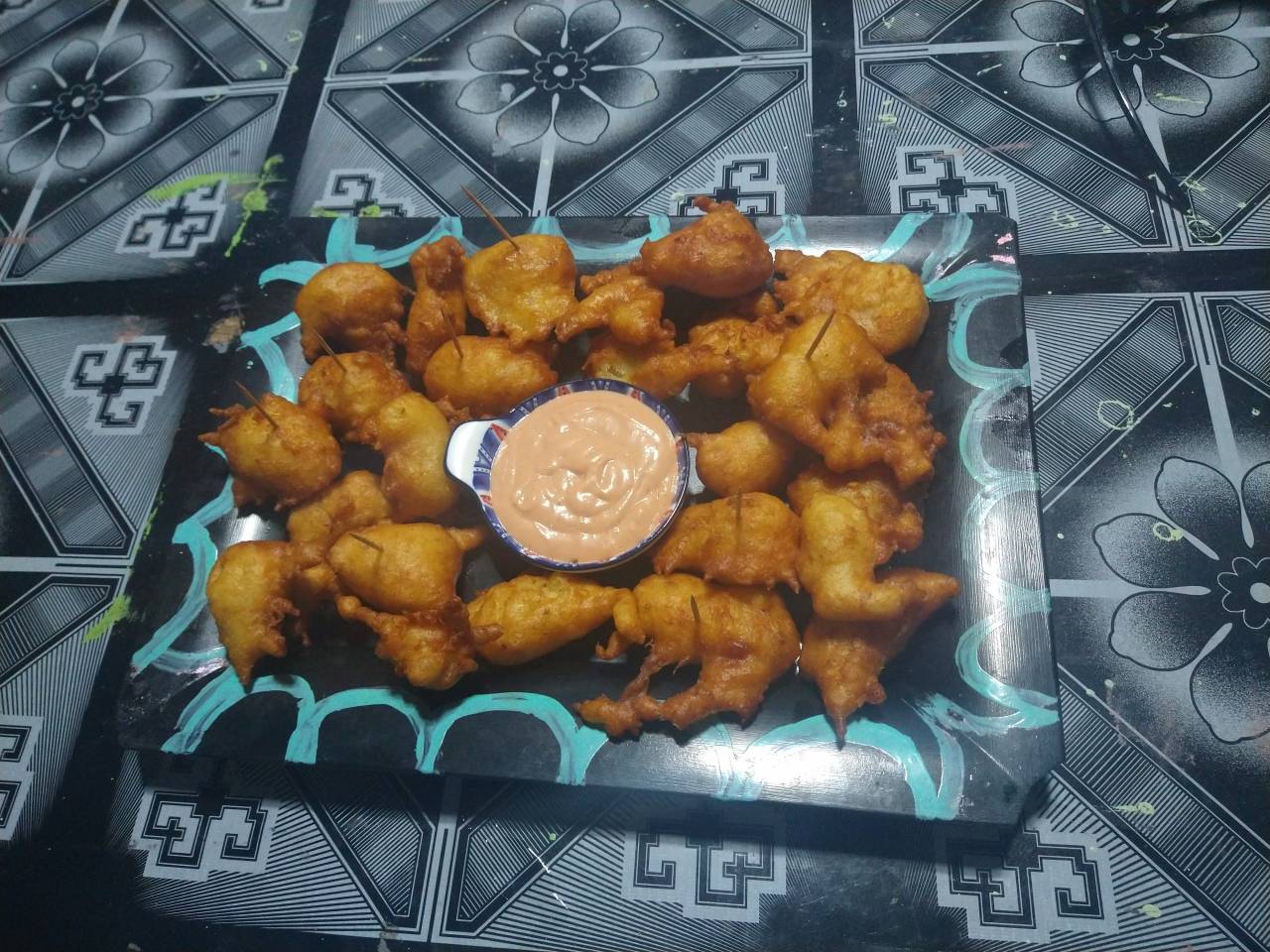
Salt cod accras: how are these Creole fritters made?
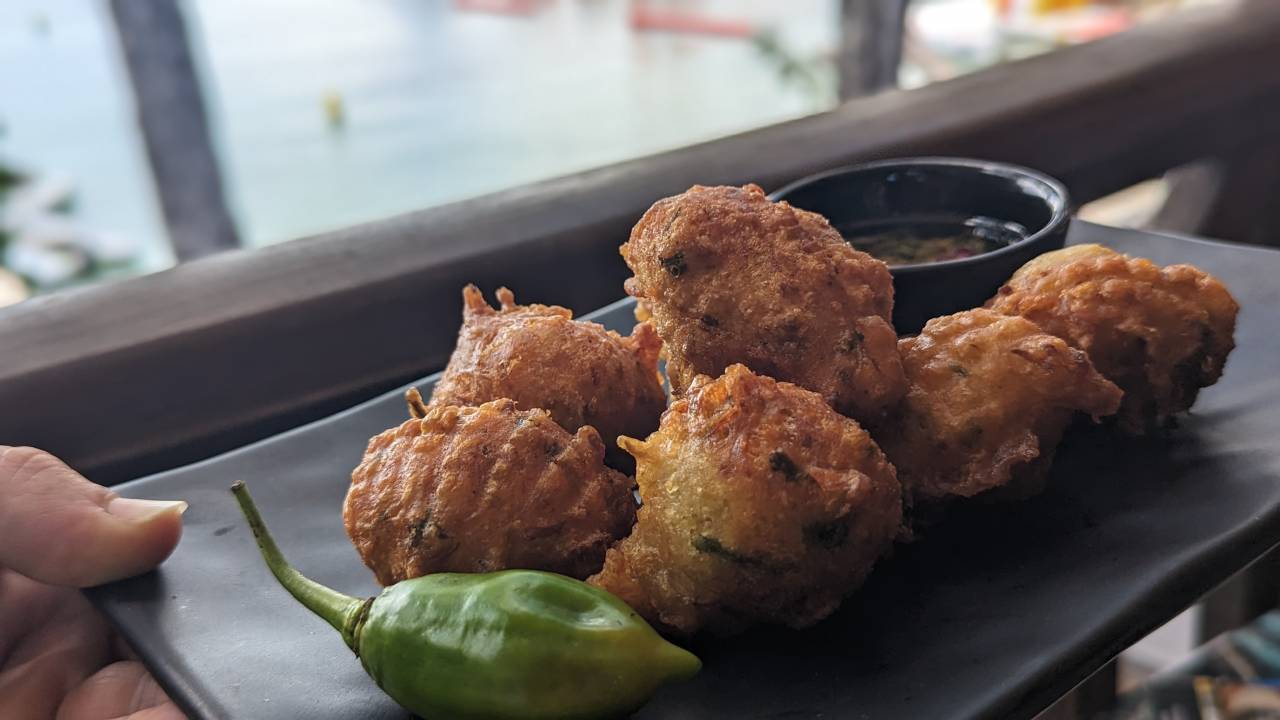
Accras are small fried salt cod fritters, crispy on the outside and soft on the inside, flavoured with spring onion, garlic and the mild “vegetarian” chilli. A must-have for the aperitif, they are found at every market in Guadeloupe, in the lolos and as takeaway. Chiquetaille de morue - shredded and seasoned salt cod - can also fill them in a heartier version.
What is the sauce chien that goes with accras?
Sauce chien is a cold sauce made from spring onion, parsley, garlic, vegetarian chilli, lime and oil. It is served on the side, for dipping the accras. The vegetarian chilli, colourful and very fragrant but not very hot, gives the sauce its characteristic Caribbean aroma without burning the palate. It is one of the staples of Guadeloupean Creole cuisine.
At the aperitif, anchored at Deshaies or Sainte-Anne, the accras bought at the market reheat quickly in a frying pan on board. A few minutes are enough to bring back their crispness before serving them in the cockpit with sauce chien.
The bokit: what is this fried sandwich found everywhere in Guadeloupe?
The bokit is a unique Guadeloupean sandwich: a dough of flour fried in oil, soft on the inside and crispy on the outside, filled with shredded salt cod, chicken, ham or cheese. Born during the era of slavery as a filling and inexpensive meal for the workers of the sugar cane fields, it has become the emblematic street food of Guadeloupe. In 2025, the word “bokit” was officially added to the dictionary.
Before casting off for Les Saintes, a bokit from the Pointe-à-Pitre market or a Bas-du-Fort food truck makes the ideal quick lunch on board: filling, compact, and served hot within minutes.
Fish blaff: what is this Creole cooking technique?
The blaff is a clear Guadeloupean court-bouillon. The fish - snapper, mahi-mahi or marlin depending on the season - marinates in lime, garlic and vegetarian chilli for at least 30 minutes, then cooks for 5 minutes in a broth flavoured with bois d’Inde and aromatic herbs. The name is said to come from the sound the fish makes as it drops into the boiling water.
Fresh fish or your own catch for a real blaff?
A successful blaff relies above all on the freshness of the fish. The markets of Pointe-à-Pitre supply snapper, sea bream and local fish according to the catch. If you have fished along the way, a fish of the day lends itself perfectly to the technique: a simple lime-garlic-chilli marinade, then quick cooking in the broth. The onboard steamer is enough, provided you marinated the day before.
On board or ashore, the blaff makes the most of fish bought fresh at the Pointe-à-Pitre market that very morning. It is prepared in less than 30 minutes, marinade included - one of the most accessible Creole dishes to cook while cruising.
Dombrés and crab matété: what are the celebration dishes of Guadeloupe?
Guadeloupean Creole cuisine reserves its most generous dishes for moments of sharing. Dombrés and crab matété are two staples of the family table, each with its own history.
Dombrés - what are they?
Dombrés are balls of flour dough simmered for a long time in a fragrant broth with pork tails, prawns, conch or crab. A convivial and comforting dish, served as a one-pot family meal, it combines melt-in-the-mouth textures with a deeply spiced sauce. Local vegetables - yam, chayote, plantain - accompany it according to family recipes.
Crab matété - why is it linked to Easter?
Crab matété is rice simmered for a long time with crab and Creole spices. The term “matété” comes from the Creole word for “mixture”. Its festive Easter tradition dates back to the era of slavery: as Lent forbade fatty meat, crab - considered lean meat - became the permitted celebration dish. This tradition has carried on to this day, making matété the emblematic Easter dish in Guadeloupe.
Anchored at Basse-Terre during crab season, local stalls sell ready-made dombrés to take away - the ideal cargo to load before weighing anchor.
Where to find Caribbean specialities at the markets of Guadeloupe?
The Saint-Antoine market and the Bergevin market in Pointe-à-Pitre are the two essentials for stocking up on spices, fruits, local vegetables and fresh fish before or during a cruise. Both accessible from the Bas-du-Fort marina, they offer a direct immersion in local Creole cuisine.
Saint-Antoine market - opening hours and products
The metal hall of the Saint-Antoine market, listed as a Historic Monument and inaugurated on 17 January 1874, sits at the junction of the Frébault, Saint-John-Perse and Peynier streets in Pointe-à-Pitre. Open Monday to Saturday from 6am to 2pm, it concentrates the spices (bois d’Inde, cinnamon, vanilla, nutmeg, colombo blend, ginger), fresh vegetarian chilli, spring onion, lime, tropical fruits and artisanal rums and punches. This is where local cooks stock up every morning.
Bergevin market - the locals’ supply point
Little known to tourists but appreciated by locals and sailors, the Bergevin market is located at the corner of the boulevard de l’Amitié des Peuples de la Caraïbe and the quai Lefèvre. It opens on Monday, Wednesday and Saturday from 3am to 1pm. It is the wholesale market of Pointe-à-Pitre: local vegetables, fresh fish, poultry and exotic fruits in large quantities, at prices noticeably lower than the supermarkets next to the marina.
The Bas-du-Fort marina, Sailoe’s base in Guadeloupe, is located about 5 km from the Bergevin market. A morning trip by taxi is enough to load the catamaran before casting off. To plan your cruise in Guadeloupe: Caribbean cruises and catamaran itineraries in Guadeloupe.
Ti-punch and infused rums: how are they really drunk?
The ti-punch is the aperitif drink of the Caribbean: white agricole rum, cane syrup, a wedge of lime. The recipe is simple, but the gesture matters as much as the ingredients - everyone prepares their own glass to their taste, with no one serving on another’s behalf.
What is the agricole rum of Guadeloupe?
The agricole rum of Guadeloupe is distilled from fresh cane juice, unlike industrial rums that use molasses. It has held a Protected Geographical Indication (PGI) since 2015, an official protection that governs the production conditions on the island. Among the working distilleries: Bielle on Marie-Galante, Damoiseau, Bellevue and Longueteau, each with its own aromatic profile.
What is a Caribbean infused rum?
Infused rum (rhum arrangé) is an agricole rum macerated with tropical fruits - vanilla, ginger, mango, passion fruit, golden apple - for several weeks. Every family has its recipe, passed down from generation to generation. It is a strong tradition of sharing in the Caribbean: to offer a glass of your infused rum is to offer time and care.
Some crews bring along a bottle of infused rum prepared before departure - a way to mark each cruise in Guadeloupe with its own flavours. To organise your Caribbean cruise: discover our Caribbean destinations.
Caribbean desserts: which are the must-try treats?
Coconut flan, coconut blancmange and the tourment d’amour of Les Saintes are the emblematic desserts of the French Caribbean. Light, fragrant and suited to the tropical climate, they naturally round off a Creole meal.
Coconut flan is made with coconut milk - its melting texture and gentle aroma make it a universal classic on every Creole table. Coconut blancmange, fresh and lightly sweetened, made with a base of coconut milk and gelatine, is particularly enjoyed in the Caribbean heat.
The tourment d’amour is a small tart filled with coconut, guava or banana jam, originating from the archipelago of Les Saintes - more precisely from Terre-de-Haut. It is bought at the Les Saintes landing stage and is found almost nowhere else. A stop at Les Saintes to buy some fits naturally into a Guadeloupe itinerary: count on about 45 minutes of sailing from Basse-Terre depending on conditions.
FAQ - Caribbean specialities
What are the Caribbean specialities?
The Caribbean specialities most representative of Guadeloupe are salt cod accras (spiced fritters), colombo (Creole curry with adapted Indian spices), bokit (Guadeloupean fried sandwich), fish blaff (clear court-bouillon), dombrés (dough balls simmered in broth), crab matété (Easter celebration dish), coconut flan and the tourment d’amour of Les Saintes. The ti-punch made with PGI Guadeloupe agricole rum is the essential aperitif drink.
What are the typical Creole dishes?
Creole cuisine rests on a few pillars: accras (crispy starter), colombo (slow-cooked dish with spices of Indian origin), smoked (boucané) chicken or fish, grilled spiny lobster with sauce chien, and dombrés (dough balls simmered in broth). Local vegetables - yam, chayote, breadfruit, plantain - accompany almost every dish. Each island of the French Caribbean has its variations, but the cultural foundation is shared.
What is the bokit?
The bokit is a Guadeloupean sandwich made of a fried flour dough, crispy on the outside and soft on the inside, filled with shredded salt cod, chicken, ham or cheese. It is the emblematic street food of Guadeloupe, born during the era of slavery as a filling meal for the workers of the cane fields. The word “bokit” was officially added to the dictionary in 2025.
What is a typical Caribbean dish?
Colombo is considered the national dish of Guadeloupe and Martinique. Inspired by Indian curry, it has been adapted to local spices - notably bois d’Inde - and to the meats available on the islands: chicken, goat, pork or fish. It differs from Asian curry by the addition of bois d’Inde and lime, which give it a distinctly Caribbean aromatic profile. The etymology of the word comes from the Tamil “kalumbu”.
Where to eat local in Guadeloupe?
The markets of Pointe-à-Pitre are the best starting point: the Saint-Antoine market (known as the spice market, open Monday to Saturday from 6am to 2pm) and the Bergevin market (Monday, Wednesday and Saturday from 3am to 1pm). The lolos - small roadside stalls - serve Creole dishes at local prices. For sailors on a cruise, the markets of Sainte-Anne and Deshaies make it possible to top up coastal provisioning without returning to Pointe-à-Pitre.
Read also · Destinations & itineraries
Related articles
The Bay of Les Saintes, Seen From a Catamaran That Stays the Night
The Bay of Les Saintes, south of Guadeloupe between Terre-de-Haut and Terre-de-Bas, is usually visited in three hours, squeezed between two shuttle…
Where to Dive in the Seychelles on a Catamaran Cruise?
From a catamaran at anchor, scuba diving in the Seychelles is possible at dozens of sites around Mahe, Praslin and La Digue,…
Wingfoiling in the Seychelles: spots, winds and best season
The Seychelles offer an ideal window for wingfoiling from June to September, driven by the south-east trade winds that blow between 15…
Got a project in mind?
Our team is here to help
30 years of expertise, 5 physical bases, our own fleet. We reply within 24h.
Start the conversation