
Destinations & itineraries · 03 Jun 2026 · 9 min read
Snorkeling in the Lavezzi Islands: the best spots and fish to observe
The Lavezzi Islands, off Bonifacio, shelter the most preserved seabeds in Corsica. Accessible only by boat, these granite islets, classified as a nature reserve since 1982, offer crystal-clear waters home to groupers, white sea bream, gilthead bream and rainbow wrasse. Three coves concentrate most of the underwater spectacle: Cala Achiarina, Cala di u Grecu and […]
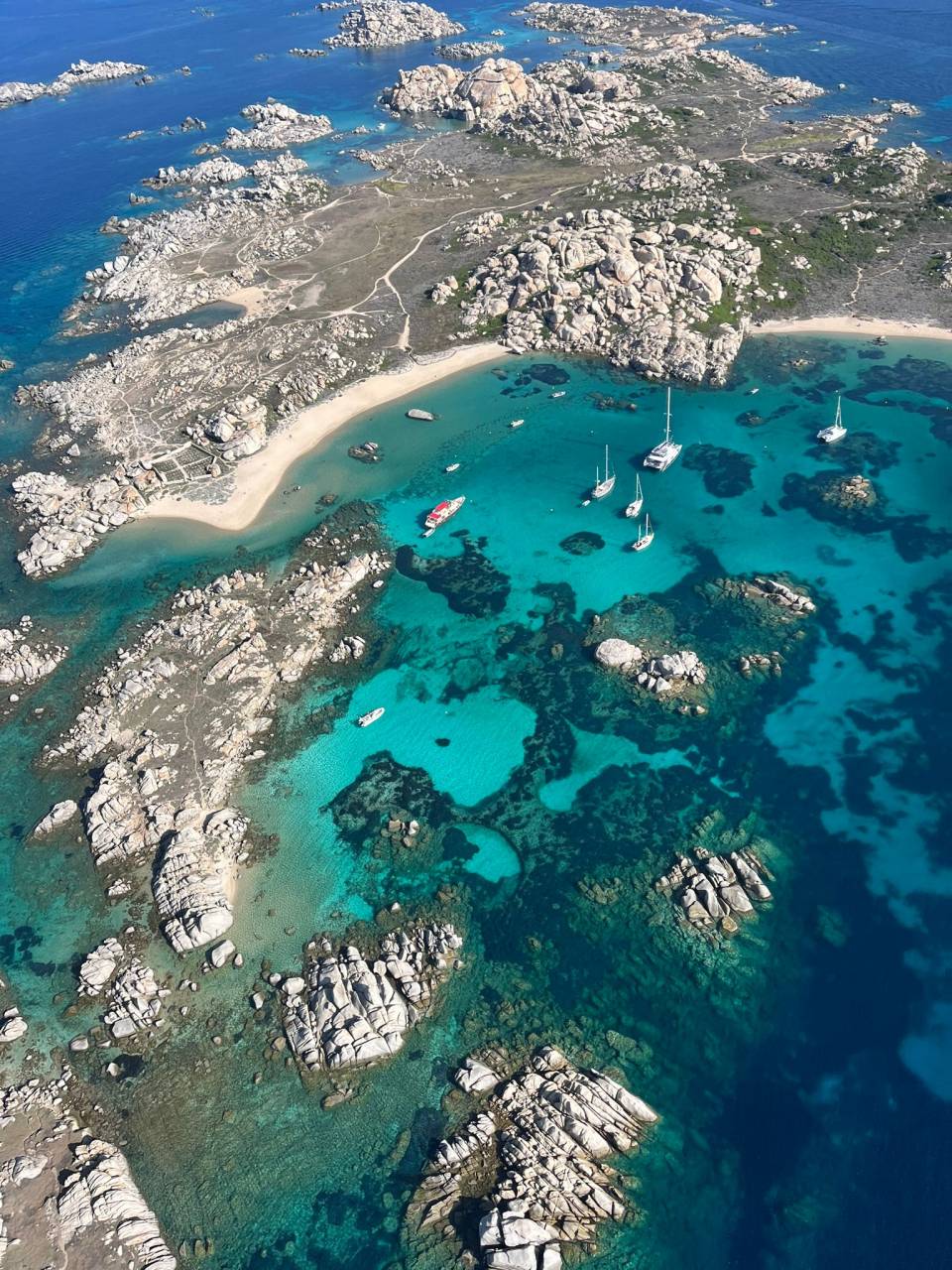
The Lavezzi Islands, off Bonifacio, shelter the most preserved seabeds in Corsica. Accessible only by boat, these granite islets, classified as a nature reserve since 1982, offer crystal-clear waters home to groupers, white sea bream, gilthead bream and rainbow wrasse. Three coves concentrate most of the underwater spectacle: Cala Achiarina, Cala di u Grecu and Cala della Chiesa.
Why are the Lavezzi Islands the best snorkeling spot in Corsica?
The Lavezzi Islands have enjoyed continuous protection since 1982 for the land area, and since the decree of 23 September 1999 for the marine zone. More than 40 years without fishing pressure have allowed the underwater wildlife to recover to a level that is rare in the Mediterranean. The result is visible from the surface: an unusually high density of fish, groupers that approach divers without fear, and water kept around 26°C in summer.
The archipelago receives around 200,000 visitors each summer, making it one of the most visited natural sites in Corsica. Access regulation - no wild anchoring, marked trails, delimited swimming zones - preserves the quality of the seabeds despite this crowd. Located around 10 km south-east of Bonifacio, the Bouches de Bonifacio nature reserve concentrates between sixty and seventy recorded marine species, among seagrass, sponges and pen shells.
What are the best snorkeling spots in the Lavezzi Islands?
The Lavezzi have several swimming zones delimited by buoys. Three coves stand out for snorkeling: each offers a different seabed profile, specific access conditions and characteristic wildlife. The spot-by-spot format below lets you choose according to your level and your preferences.
Cala Achiarina - the natural aquarium
Cala Achiarina is the most renowned snorkeling spot in the Lavezzi, and probably in all of southern Corsica. From the East landing stage, count around 800 metres on foot, or 20 minutes of walking on the marked trail. The cove forms a natural pool sheltered from the wind, with a stable bottom between 2 and 4 metres deep. The fish here are not very shy: brown groupers, white sea bream, gilthead bream, saddled sea bream and rainbow wrasse swim within reach of your mask. It is the busiest cove, but also the most spectacular.
Cala di u Grecu - rocks and relief
Cala di u Grecu lies on the East coast, around 500 metres from Cala Achiarina. Its profile is different: the seabeds alternate between rocky zones and Posidonia seagrass beds. The variation in relief attracts more discreet species, moray eels and scorpionfish in particular, which nest in the granite crevices. The water is slightly less calm than at Cala Achiarina, which makes it a complementary spot for snorkelers who want to vary the scenery.
Cala della Chiesa - calm and preservation
Cala della Chiesa sits to the north of the archipelago, 15 to 20 minutes on foot from the landing stage. Less busy than the other two coves, it offers a calmer experience. The seabeds here are preserved: dense Posidonia, abundant pen shells and sponges. The wildlife is more discreet than at Cala Achiarina, but for free divers who seek tranquillity rather than fish density, it is often their favourite cove.
Which fish can you observe while snorkeling in the Lavezzi Islands?
The Lavezzi shelter around 70 marine species recorded in the nature reserve. The table below lists the main species you can observe while snorkeling, with their behaviour and their usual depth.
| Species | Usual size | Behaviour while snorkeling |
|---|---|---|
| Brown grouper | up to 140 cm | Not very shy, approaches divers in Cala Achiarina |
| White sea bream | 20-40 cm | Dense schools, present in every cove |
| Gilthead bream | up to 50 cm | Active near the surface, visible in shallow water |
| Saddled sea bream | 20-30 cm | Dense schools in open water, recognisable black band |
| Rainbow wrasse | 15-25 cm | Colourful, green and red males, very common |
| Mullet | 30-60 cm | Schools at the surface near the landing stages |
| Barracuda | 40-80 cm | Solitary or small group, slow swimmer |
| Moray eel | 60-120 cm | Hidden in the rocks, harmless if not provoked |
| Scorpionfish | 15-30 cm | Camouflaged on rocky bottoms, do not put your hands down |
| Red mullet | 15-25 cm | Sandy bottom, visible at shallow depth |
| Pandora | 20-35 cm | Common, schools in clear water |
| Wrasse | 15-40 cm | Colourful, characteristic zigzag swimming |
| Rockling | 20-40 cm | Rocky bottom, discreet |
| Bogue | 15-25 cm | Dense schools, distinctive eyes |
On the flora side, Posidonia forms dense meadows between 0 and 10 metres, an essential habitat for many species. The pen shells (Pinna nobilis), protected shellfish that can exceed 50 centimetres, are visible in calm zones. Multicoloured sponges line the rocks in shaded areas.
How do you reach the Lavezzi Islands for snorkeling?
The maritime shuttle is the most common way to reach the Lavezzi from Bonifacio. The SPMB (Société des Promenades Maritimes des Bouches de Bonifacio) runs departures from Bonifacio every hour between 9 am and 4 pm in high season. Returns run every hour between 11.30 am and 5.30 pm. The crossing takes around 30 minutes on a direct route. The round-trip fare is 37 € for an adult and 26 € for a child aged 4 to 12. Children under 4 travel free.
Sailing to the Lavezzi aboard a catamaran radically changes the experience. Instead of disembarking with the shuttle groups and walking to the coves, you can anchor directly opposite the spots. From the deck of the boat, the transparent seabeds are visible even before you put on your mask. You slip into the water from the side, explore the cove at your own pace, and come back for lunch on board. The Lavezzi are among the classic stops of a catamaran cruise in Corsica. Sailoé offers organised crewed cruises in the Bouches de Bonifacio departing from Bonifacio, with an anchorage at the Lavezzi built into the programme.
For boaters who wish to reach them independently, wild anchoring is forbidden in the reserve. The authorised anchorage zones are marked and delimited by the OEC (Office de l’Environnement de la Corse).
When is the best time to go snorkeling in the Lavezzi Islands?
The optimal period runs from June to September. The water reaches 26°C in July and August, weather conditions are stable and underwater visibility is at its best. June and September are the windows to favour to avoid the peak crowds of July and August while still enjoying water that is already warm and excellent visibility.
The prevailing wind, the libeccio, can make the sea rough without warning, particularly in the Bouches de Bonifacio, known for their currents. The weather should be checked every morning, and some outings may be cancelled or rescheduled depending on conditions. From a catamaran, the stability of the boat and the ability to change shelter quickly according to the wind are a concrete advantage compared with scheduled shuttles that keep their timetables whatever the comfort conditions.
Jellyfish may be present at the end of summer (August-September) depending on the currents, without making swimming impossible. A mask that covers the face remains the most effective protection.
What is the underwater trail of the Lavezzi Islands?
The underwater trail of the Lavezzi Islands is a route organised by the OEC (Office de l’Environnement de la Corse) in the nature reserve. It lasts around an hour and is done snorkeling, accompanied by a naturalist guide. The circuit is free (excluding the cost of the crossing), accessible from age 8, in groups of 5 people maximum. It is advisable to book on 06 25 25 03 74. The trail runs from June to August.
This guided format is particularly suited to families who want to understand what they are observing and have a scientific view of the reserve’s biodiversity. The species are named, their role in the ecosystem explained, and the behaviour to adopt towards protected animals is specified by the guide.
What should you know before going snorkeling in the Lavezzi Islands?
The Lavezzi are a protected natural area. A few rules are non-negotiable: it is forbidden to collect shells, to take marine organisms or to feed the fish. Fishing is forbidden in the reserve. The buoys marking the swimming zones must be respected. Fires and camping are also forbidden on the islets.
In terms of equipment, a mask and snorkel are enough for most spots. A light wetsuit (3 mm) can be useful in June and September for snorkelers who feel the cold. Waterproof sunscreen is to be avoided in the reserve (pollutants) - prefer a textile protection or a mineral cream. Bring enough water, as there is no freshwater source on the islets.
If you set off by catamaran, access to the spots is more flexible: no shuttle timetable constraint, the possibility of staying longer at a spot or of changing cove according to conditions.
FAQ - Snorkeling in the Lavezzi Islands
Which fish can you observe in the Lavezzi Islands?
The Lavezzi Islands shelter around 70 marine species recorded in the Bouches de Bonifacio nature reserve. The species most observable while snorkeling are the brown groupers (which can reach 140 cm and approach divers in Cala Achiarina), the white sea bream, the gilthead bream, the saddled sea bream, the rainbow wrasse, the barracudas and the moray eels. Posidonia and pen shells (Pinna nobilis) complete the underwater scenery.
How do you get to the Lavezzi Islands?
From Bonifacio, the SPMB maritime shuttle leaves every hour between 9 am and 4 pm in high season. The round-trip fare is 37 € for an adult, 26 € for a child aged 4 to 12, free for children under 4. The crossing takes around 30 minutes. It is also possible to reach them by catamaran as part of an organised cruise, with an anchorage directly off the spots.
Can you snorkel freely in the Lavezzi Islands?
Yes, snorkeling is free in the swimming zones marked by buoys. It is, however, forbidden to take marine organisms, to feed the fish or to leave the delimited zones. The OEC’s guided underwater trail is an accompanied alternative, free of charge, accessible from age 8, from June to August (booking on 06 25 25 03 74).
When is the best time to visit the Lavezzi Islands?
The optimal period is June to September, with water at around 26°C and maximum underwater visibility. June and September offer fewer crowds than July and August. The libeccio wind can cause rough conditions without warning in the Bouches de Bonifacio: it is recommended to check the weather every morning before setting off.
Are the Lavezzi Islands accessible by private boat?
Wild anchoring is forbidden in the Bouches de Bonifacio nature reserve. The authorised anchorage zones are marked and managed by the OEC. Boaters on a catamaran can reach them within the regulatory framework, by respecting the delimited zones.
To discover the Bouches de Bonifacio from the sea in the best conditions, see our dedicated page on the catamaran cruise in Corsica with crew. All our cruises in Corsica include stops at the Lavezzi and in the coves that cannot be reached on foot. For another nature experience in southern Corsica, the hiking route around Santa Giulia and the fishing trip in the Bouches de Bonifacio are two complementary stops from your catamaran.
Read also · Destinations & itineraries
Related articles
The Bay of Les Saintes, Seen From a Catamaran That Stays the Night
The Bay of Les Saintes, south of Guadeloupe between Terre-de-Haut and Terre-de-Bas, is usually visited in three hours, squeezed between two shuttle…
Where to Dive in the Seychelles on a Catamaran Cruise?
From a catamaran at anchor, scuba diving in the Seychelles is possible at dozens of sites around Mahe, Praslin and La Digue,…
Wingfoiling in the Seychelles: spots, winds and best season
The Seychelles offer an ideal window for wingfoiling from June to September, driven by the south-east trade winds that blow between 15…
Got a project in mind?
Our team is here to help
30 years of expertise, 5 physical bases, our own fleet. We reply within 24h.
Start the conversation