
Destinations & itineraries · 03 Jun 2026 · 10 min read
Snorkeling in the Seychelles: the best spots seen from offshore
The Seychelles rank among the best snorkeling destinations in the Indian Ocean. The richest sites - the islet of Saint-Pierre, the Sainte-Anne Marine Park, Coco Island - can only be reached by boat. The best season falls in April-May and October-November, when visibility can reach 30 metres and the sea is calm between the two […]
The Seychelles rank among the best snorkeling destinations in the Indian Ocean. The richest sites - the islet of Saint-Pierre, the Sainte-Anne Marine Park, Coco Island - can only be reached by boat. The best season falls in April-May and October-November, when visibility can reach 30 metres and the sea is calm between the two monsoons. What the usual travel accounts don’t tell you: from the deck of a catamaran at anchor, these sites can be explored at dawn, without the crowds of the day excursions.
Why are the Seychelles an exceptional snorkeling destination?
The Seychelles protect more than 50% of their territory as nature reserves, which makes them one of the most preserved snorkeling destinations in the Indian Ocean. The archipelago counts more than 115 islands and islets, including three large granite islands - Mahé, Praslin, La Digue - that concentrate the most accessible spots. The water shows an average temperature of 28°C all year round, which makes snorkeling comfortable in every season, without a wetsuit.
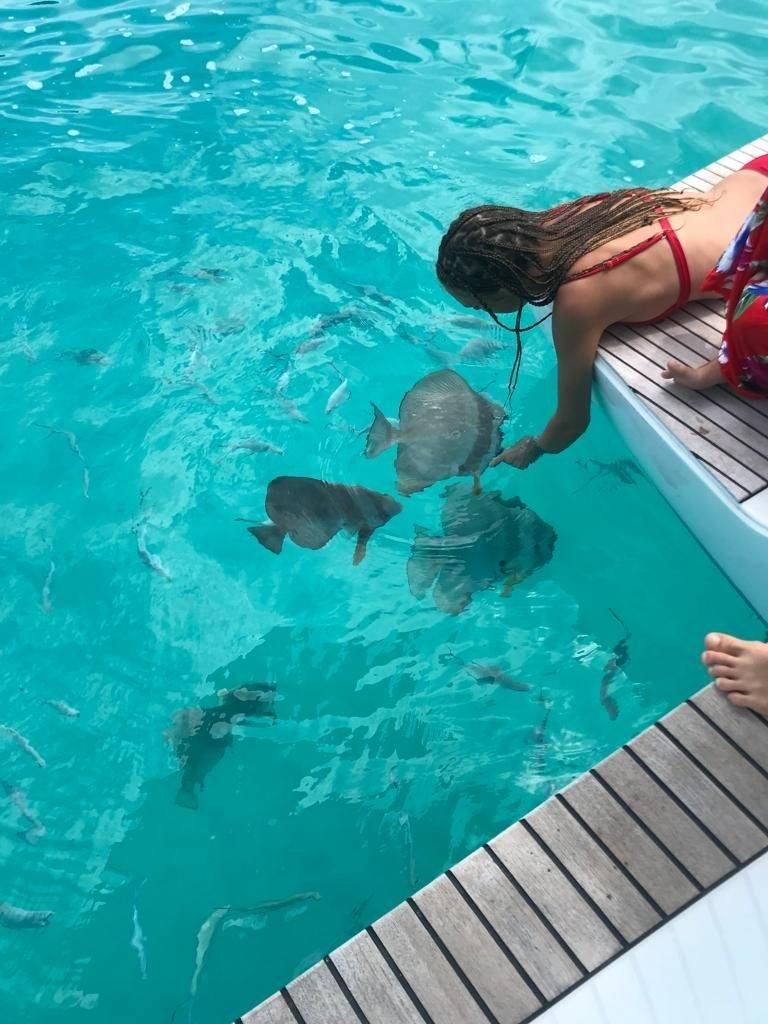
What sets the Seychelles apart from other Indian Ocean destinations is the density of protected sites and the diversity of wildlife accessible at the surface. Hawksbill turtles, leopard rays, juvenile blacktip reef sharks, schools of bluefin trevally: many of these species move between 2 and 10 metres deep, with no free-diving required. Most of the richest spots can only be reached by boat - which makes a catamaran cruise in the Seychelles the best starting point to explore them without any time constraints.
To discover these spots at the pace that suits you, rather than on a limited day excursion, our page Seychelles catamaran cruise details the itineraries and packages available from Mahé.
What are the best snorkeling spots departing from Mahé?
Sainte-Anne Marine National Park - the largest natural aquarium in the Seychelles
Created in 1973 - the first marine park in the Indian Ocean - Sainte-Anne National Park stretches over more than 1,400 hectares and is home to more than 150 species of reef fish. Located a few kilometres offshore from Victoria, it can be reached only by boat.
The park brings together six islands ringed by coral reefs with around a hundred varieties of coral. Here you cross paths with green turtles, semicircle angelfish, parrotfish, bluespotted stingrays and leopard rays. Manta rays are present in the park from April to December. From a catamaran anchored within the park’s boundaries, you can dive in at sunrise, when the waters are still calm and the first excursions have not yet left Victoria: the wildlife is undisturbed, the schools of fish complete.
Port Launay and Baie Ternay - the best-protected reefs of Mahé
Port Launay is one of the few marine parks in the Seychelles that can also be reached overland. The neighbouring Baie Ternay park, created on 11 June 1979, covers an area of 80 hectares. These two sites form a protected complex on the north-west coast of Mahé, with granite reefs characteristic of the archipelago.
The seabed is shallow - mainly 2 to 3 metres - which makes it accessible to every level. The wildlife includes green turtles, juvenile blacktip reef sharks (harmless), moray eels and manta rays during occasional passages. For a cruise, Port Launay is an ideal sheltered anchorage for a night on board: calm, good visibility, plentiful wildlife from the very next morning.
Find the coastal itineraries departing from Mahé on our Seychelles destination page.
Which snorkeling spots can you discover around Praslin?
The islet of Saint-Pierre - the most famous natural aquarium in the archipelago
Located about 1 to 2 km offshore from Praslin, the islet of Saint-Pierre can be reached only by boat. Its reputation as a “natural aquarium” rests on an exceptional concentration of tropical fish around a granite rock that rises out of the water. The islet is part of the Curieuse Marine National Park.
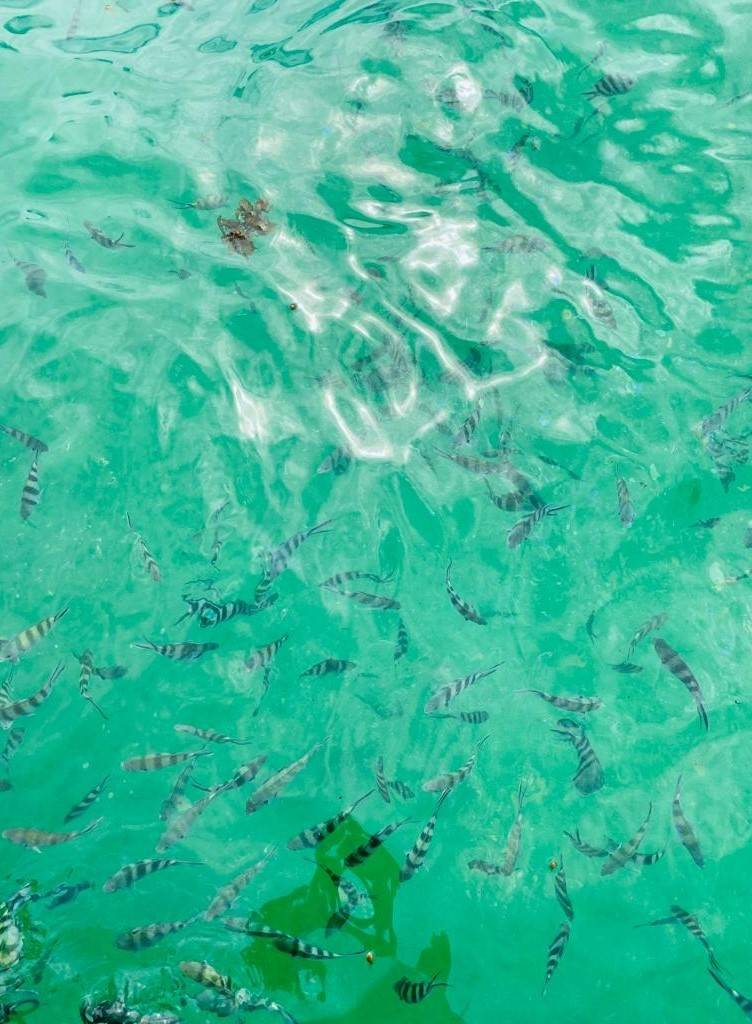
The seabed varies between 3 and 10 metres, which suits beginners and experienced snorkelers alike. Here you can watch clown surgeonfish, parrotfish, trevally, fusiliers and sometimes small reef sharks. An honest caveat: the corals of Saint-Pierre have been partially degraded since the bleaching events of recent decades, and the shallow part of the reef has suffered. But the abundance and diversity of tropical fish remain remarkable, and it is for them - more than for the corals - that the site earns its reputation. From a catamaran, Saint-Pierre fits naturally into a Praslin - Curieuse itinerary over a single day.
Curieuse - giant tortoises on land, rays in the water
Curieuse is the only island in the Seychelles where you can watch giant Aldabra tortoises on the beach and swim with hawksbill sea turtles the same afternoon. This combination, unique in the archipelago, makes it a cruise stop unlike any other.
Snorkeling takes place in the calm channel between Curieuse and Saint-Pierre: clear water, good visibility, shallow reefs. Hawksbill turtles are regularly seen at the surface. Access is only by boat, which preserves the site’s tranquillity. A Sailoe cruise departing from Praslin lets you combine Saint-Pierre in the morning and Curieuse in the afternoon, without the time constraints of an organised excursion. To learn everything about the sea and land turtles of Curieuse, see our article turtles at Curieuse.
Anse Lazio - the snorkeling spot of the most beautiful beach in the world
Anse Lazio, regularly cited among the most beautiful beaches in the world, offers quality snorkeling in the rocky zones that frame the bay, down to 4 metres deep. The beach sits at the northern tip of Praslin.
The seabed is rocky, with no coral barrier. Here you find schooling bluefin trevally, needlefish, surgeonfish, checkerboard wrasses and small moray eels. The level is intermediate. Be aware: some areas can be choppy depending on the wind direction, as the coast is exposed. The advantage of arriving by catamaran: being on site at dawn, before the first organised visits from the shore, when the beach is still empty and the wildlife undisturbed. To discover the other iconic beaches of the archipelago, our article on the most beautiful beaches in the Seychelles lists the must-sees.
Coco Island, La Digue - why is this islet worth the detour by catamaran?
Coco Island is a small granite islet located about 7 km north of La Digue, accessible only by boat. The reefs surrounding it are among the most colourful of the inner islands of the Seychelles.
The wildlife is remarkable: hawksbill turtles, leopard rays, blue damselfish, schools of neon surgeonfish, triggerfish, sometimes giant clams. Excursions often combine Coco with Félicité and the Sister Islands on the same day. An honest detail: some field surveys report that the coral seabed of Coco Island is now in a less pristine state than it once was, but the diversity of wildlife remains exceptional. The site remains one of the must-dos of inner-island snorkeling. Setting off from a catamaran anchored at La Digue lets you reach Coco at dawn, before the day excursions, and spend as much time there as you like. Find our itineraries including La Digue on our Seychelles destination page.
What is the best time to go snorkeling in the Seychelles?
The best times for snorkeling in the Seychelles are April-May and October-November: calm waters, visibility up to 30 metres, water temperatures between 27 and 29°C. These are the transition months between the two monsoons, when the sea settles and turbidity decreases.
The archipelago experiences two wind regimes. The north-west monsoon (November to March) stirs up the coasts exposed to the north and west. The south-east monsoon (May to September) generates more wind and a rougher sea on the western side. The sailor’s tip: choose the leeward coast according to the monsoon underway. During the south-east monsoon, the north and west coasts of Mahé are protected; during the north-west monsoon, the south and east coasts are calmer. This reading of the wind - second nature for a catamaran crew - is rarely shared in the usual travel accounts, but it completely changes the quality of snorkeling on site. Manta rays are present in the Sainte-Anne park from April to December.
To choose the right season according to your dates and your goals, our Seychelles destination page details the seasonality by area.
What can you observe while snorkeling in the Seychelles?
The waters of the Seychelles are home to more than 150 species of reef fish, hawksbill turtles you can regularly observe, leopard rays and, depending on the season, manta rays in the Sainte-Anne park. The fish diversity is accessible from the surface.
The most frequently observed species: hawksbill turtles and green turtles, present in the marine parks and on the rocky spots of the inner islands; leopard rays (Aetobatus ocellatus), visible on the flats and in open water; manta rays, in the Sainte-Anne park from April to December; angelfish, parrotfish, surgeonfish, bluefin trevally, fusiliers, groupers on almost every site. Juvenile blacktip reef sharks are regularly encountered at Port Launay and on certain reefs: they are harmless.
A point of transparency that few sources mention: coral bleaching is a well-documented phenomenon in the Seychelles, amplified by the El Niño episodes since 1998. Some sites have partially degraded corals at the surface. The reef ecosystem nonetheless remains in good health on the deeper zones and the protected reefs, and the diversity of animal species makes the Seychelles one of the best snorkeling destinations in the Indian Ocean. The wildlife - turtles, rays, schools of tropical fish - is exceptional regardless of the state of the corals.
Frequently asked questions about snorkeling in the Seychelles
Where can you snorkel in the Seychelles?
The best spots are concentrated on three islands: Mahé (Sainte-Anne Marine Park, Port Launay), Praslin (the islet of Saint-Pierre, Curieuse, Anse Lazio) and La Digue (Coco Island, Anse Sévère). The richest sites - Saint-Pierre, Sainte-Anne, Coco Island - can only be reached by boat and offer the most preserved waters because they are not frequented by beach swimmers.
What is the best time to go snorkeling in the Seychelles?
April-May and October-November, during the transition months between the two monsoons. These periods offer a calm sea, visibility that can reach 30 metres and water at 28-29°C. Snorkeling is possible all year round, but the quality varies according to the monsoon and the coast you choose.
Are the Seychelles a good place to go snorkeling?
Yes, with an honest caveat. Coral bleaching has affected some sites at the surface since the 1990s. But the Seychelles remain one of the best destinations in the Indian Ocean for snorkeling thanks to the diversity of species: more than 150 species of reef fish, hawksbill turtles regularly visible, leopard rays and manta rays depending on the season. The wildlife is exceptional, regardless of the state of the corals.
Where can you swim with turtles in the Seychelles?
The most reliable sites to observe hawksbill turtles are Coco Island (near La Digue), the Sainte-Anne park (green turtles), Curieuse and Félicité Island. Sea turtles are regularly visible at the surface in these protected zones. Curieuse also offers the chance to watch the giant Aldabra tortoises on land.
Can you snorkel in the Seychelles without an organised excursion?
Some spots are accessible from the beach: Anse Lazio (Praslin), Anse Sévère (La Digue). The islets of Saint-Pierre, Sainte-Anne and Coco Island require a boat. A catamaran cruise lets you reach them without time constraints, spend the night at anchor on site and dive in at dawn when the sites are empty.
Is snorkeling in the Seychelles dangerous?
No, with a few precautions. The sharks encountered in shallow waters are juvenile blacktip reef sharks, harmless if you don’t disturb them. Leopard rays are too. The main risk is the current during the monsoons: find out the wind direction before diving in and favour the protected coast. Avoid approaching or touching the marine wildlife.
Read also · Destinations & itineraries
Related articles
The Bay of Les Saintes, Seen From a Catamaran That Stays the Night
The Bay of Les Saintes, south of Guadeloupe between Terre-de-Haut and Terre-de-Bas, is usually visited in three hours, squeezed between two shuttle…
Where to Dive in the Seychelles on a Catamaran Cruise?
From a catamaran at anchor, scuba diving in the Seychelles is possible at dozens of sites around Mahe, Praslin and La Digue,…
Wingfoiling in the Seychelles: spots, winds and best season
The Seychelles offer an ideal window for wingfoiling from June to September, driven by the south-east trade winds that blow between 15…
Got a project in mind?
Our team is here to help
30 years of expertise, 5 physical bases, our own fleet. We reply within 24h.
Start the conversation